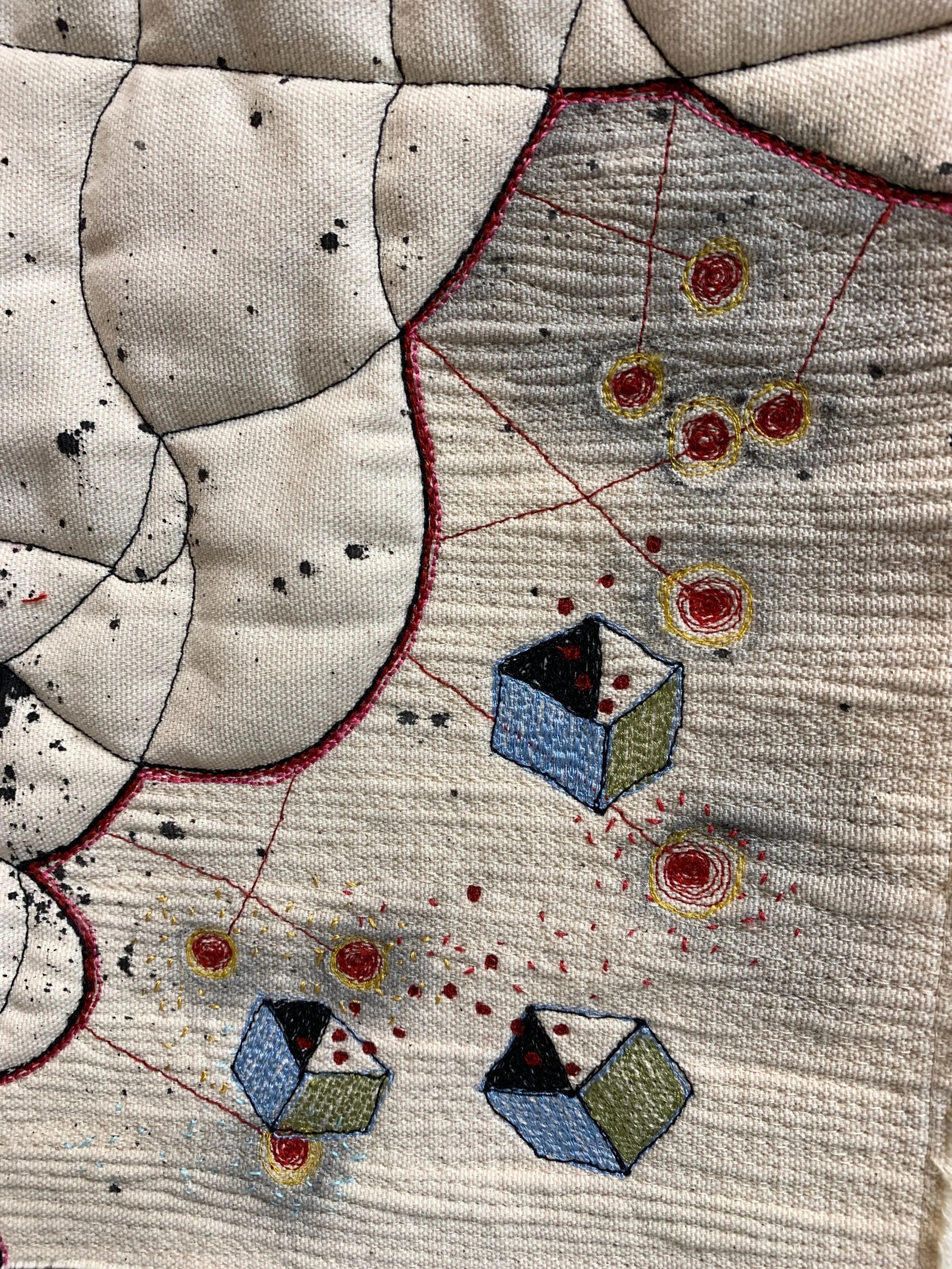
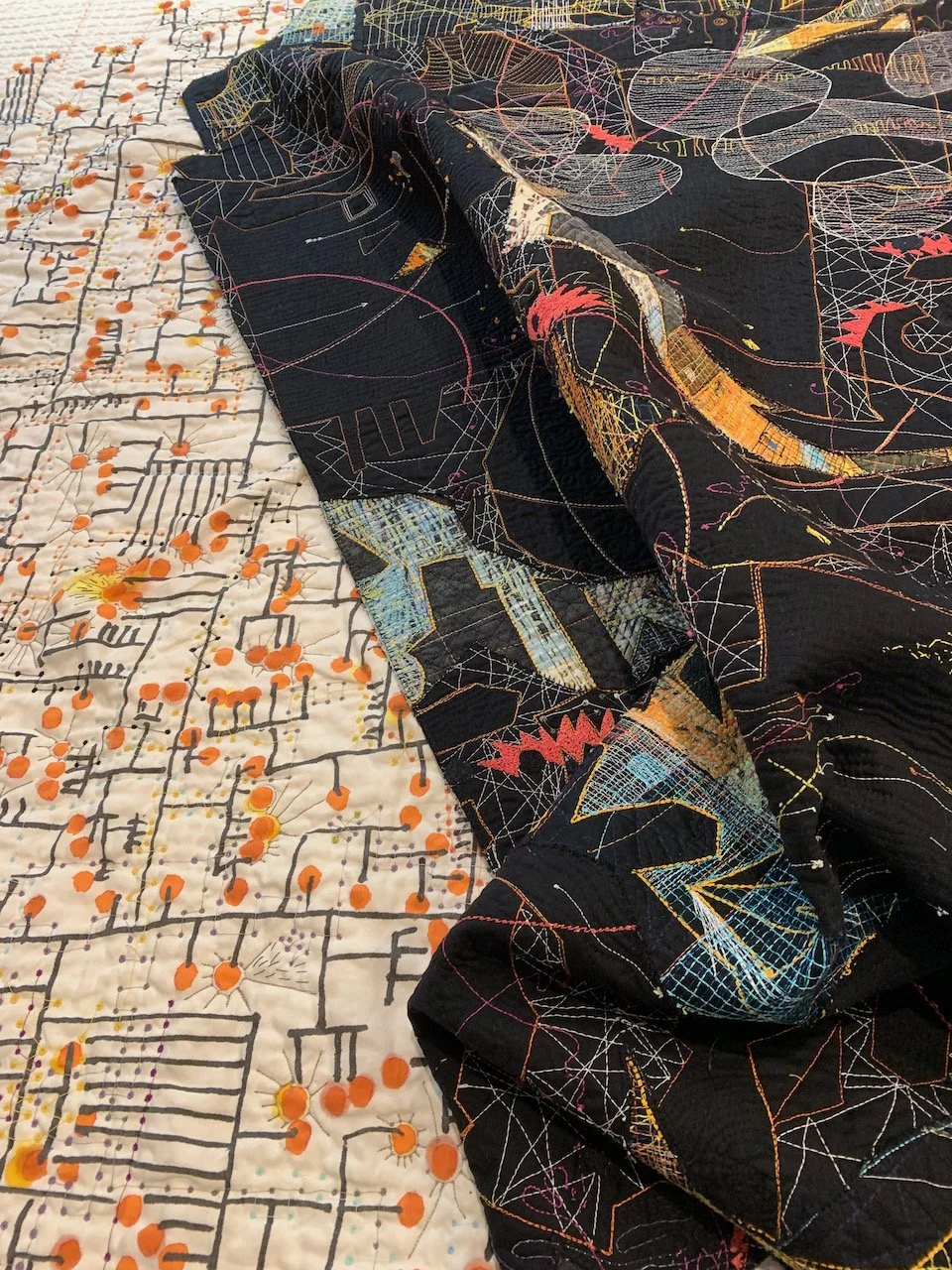
Entranced by triangles

It’s no secret that I am awash with scraps and scraps and scraps of formerly known quilted objects. I sometimes wonder if this is simply an obsession or a valid experimental process for making art.
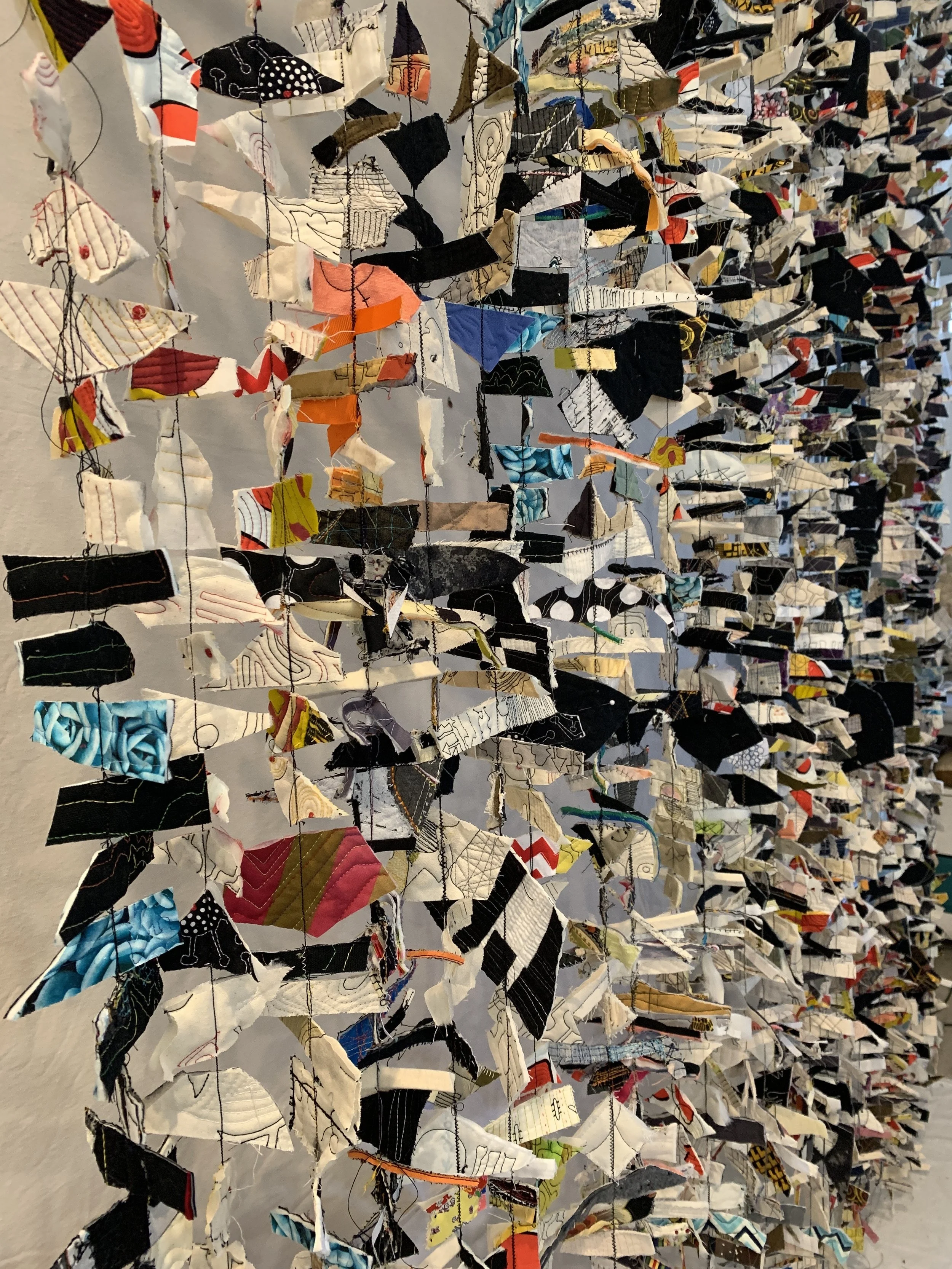
scrap curtain

I love the quote by the painter, Amy Sillman:

“I finally realized, over the last thirty years, that what I was interested in was the transformation of something into something else. And then to something else.”

Last year I cut up a number of quilted objects into triangles and created a push/pull composition that looked like this:
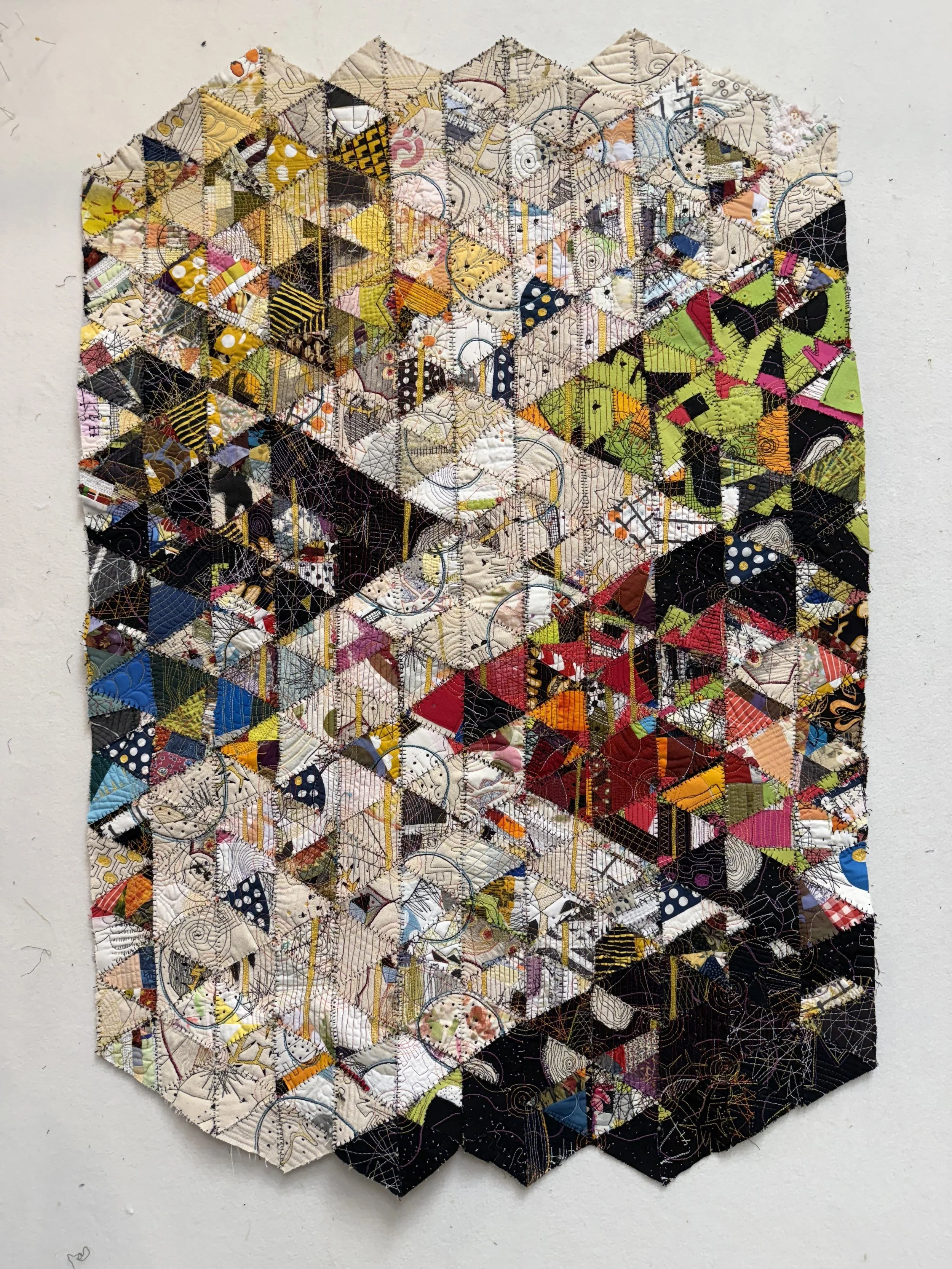
Push and pull with a lightning streak down the middle.

Using previously created work brings a wealth of story and depth to the substrate. I remember working on each and every one of those triangles in their former lifetimes. While I am always inspired by the stitching and colors of the originals I still overstitch the triangular modules to establish a denser texture.

This composition seems forced and flat. So it went in the use-it-again pile in my studio.

Stage 2 (or is that stage 3?

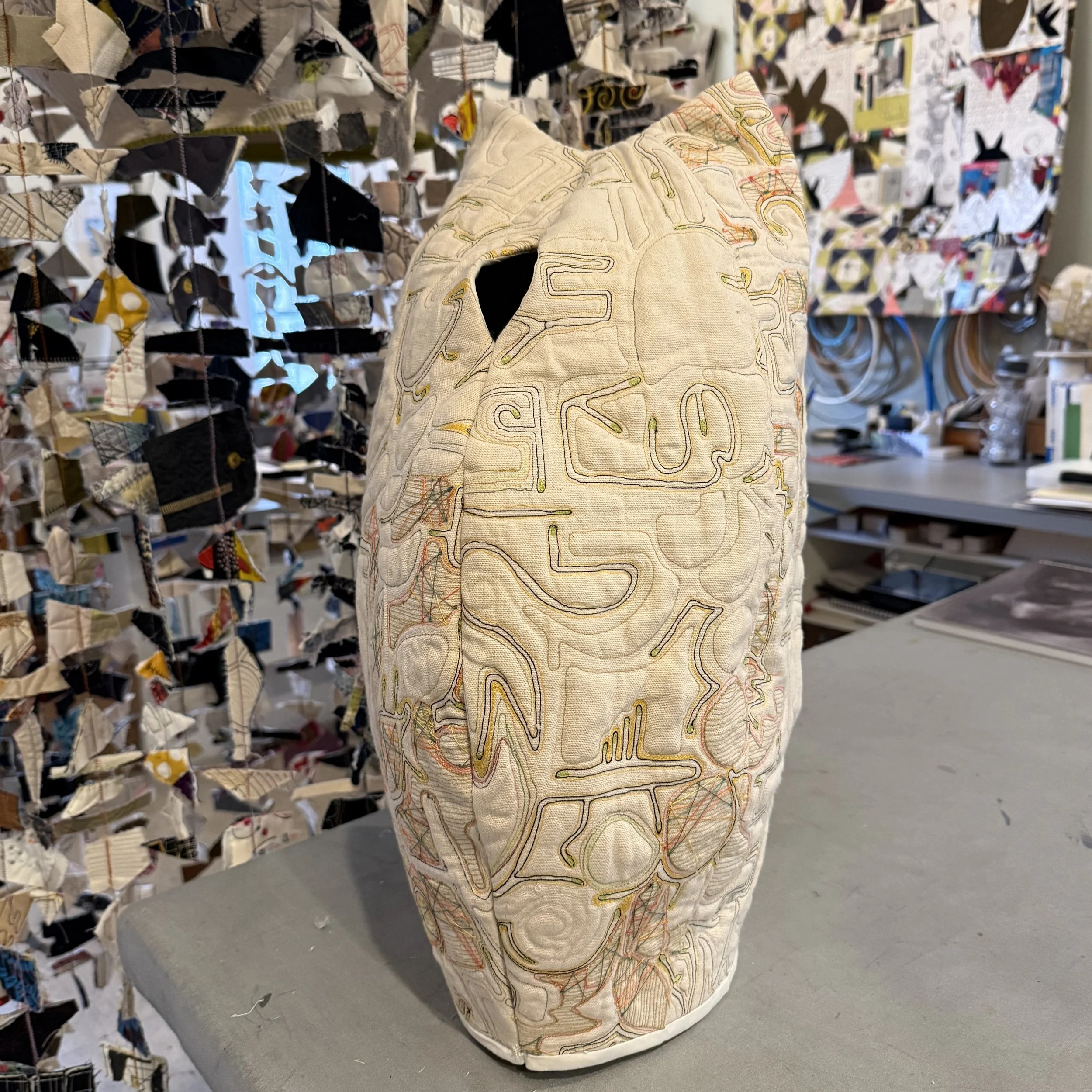
Picking up where I stopped I played with shaping the material into a new form. The layering of the fabrics and overstitching gave the raw material a weight and ballast that helped in that effort. I could fold it, mold it, roll it and stand it up. I ended up with this helmet shaped standing object. It was fun to walk around the studio wearing it for awhile.
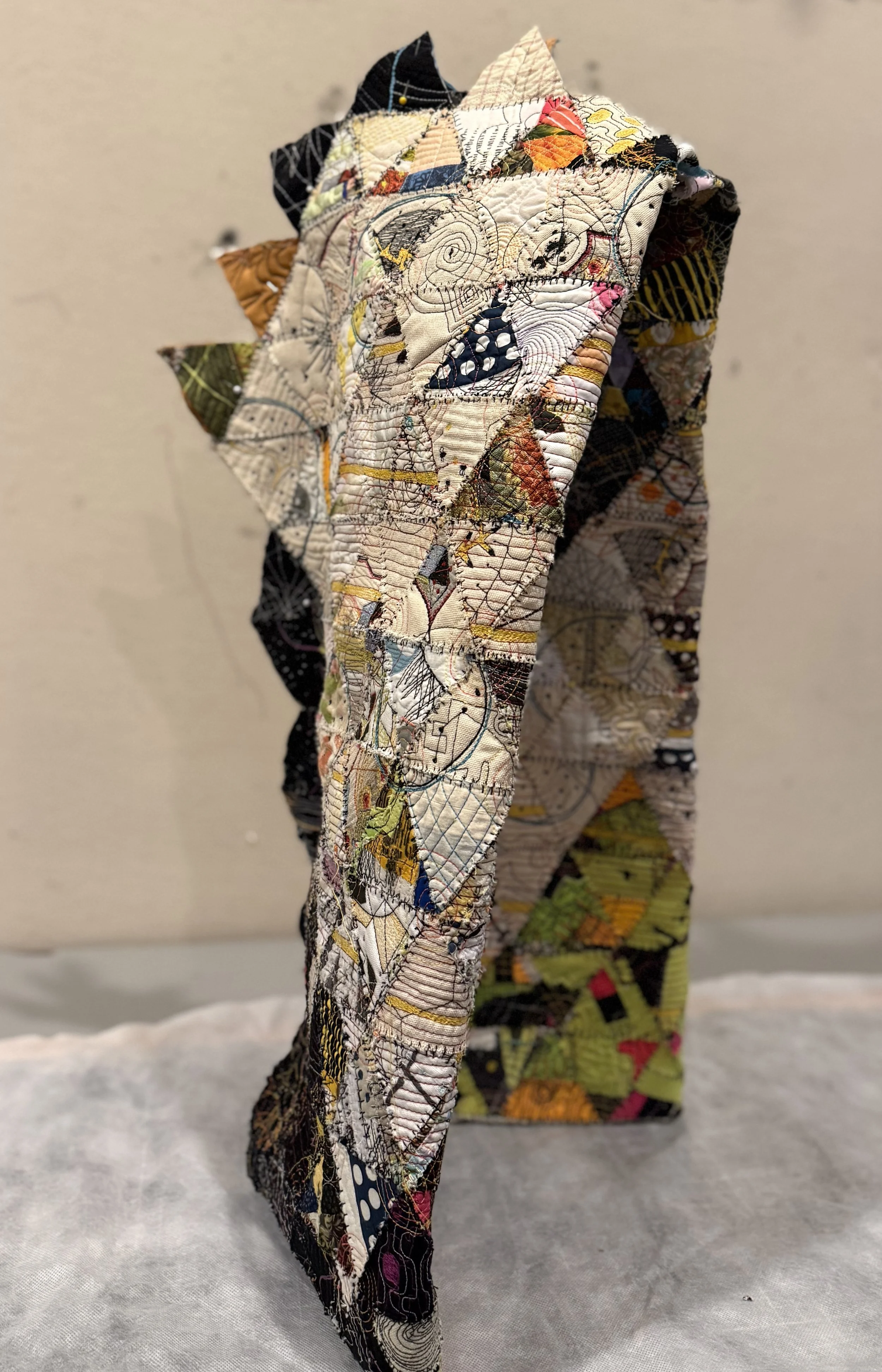
Push and pull repurposed into a sculptural helmet

It was a challenging departure from the flat piece and I learned a little about ballast and balance when standing a quilt up. But, bottom line, I wasn’t happy with it. So I cut up the triangles for a new piece.

Then I had a lot of triangles

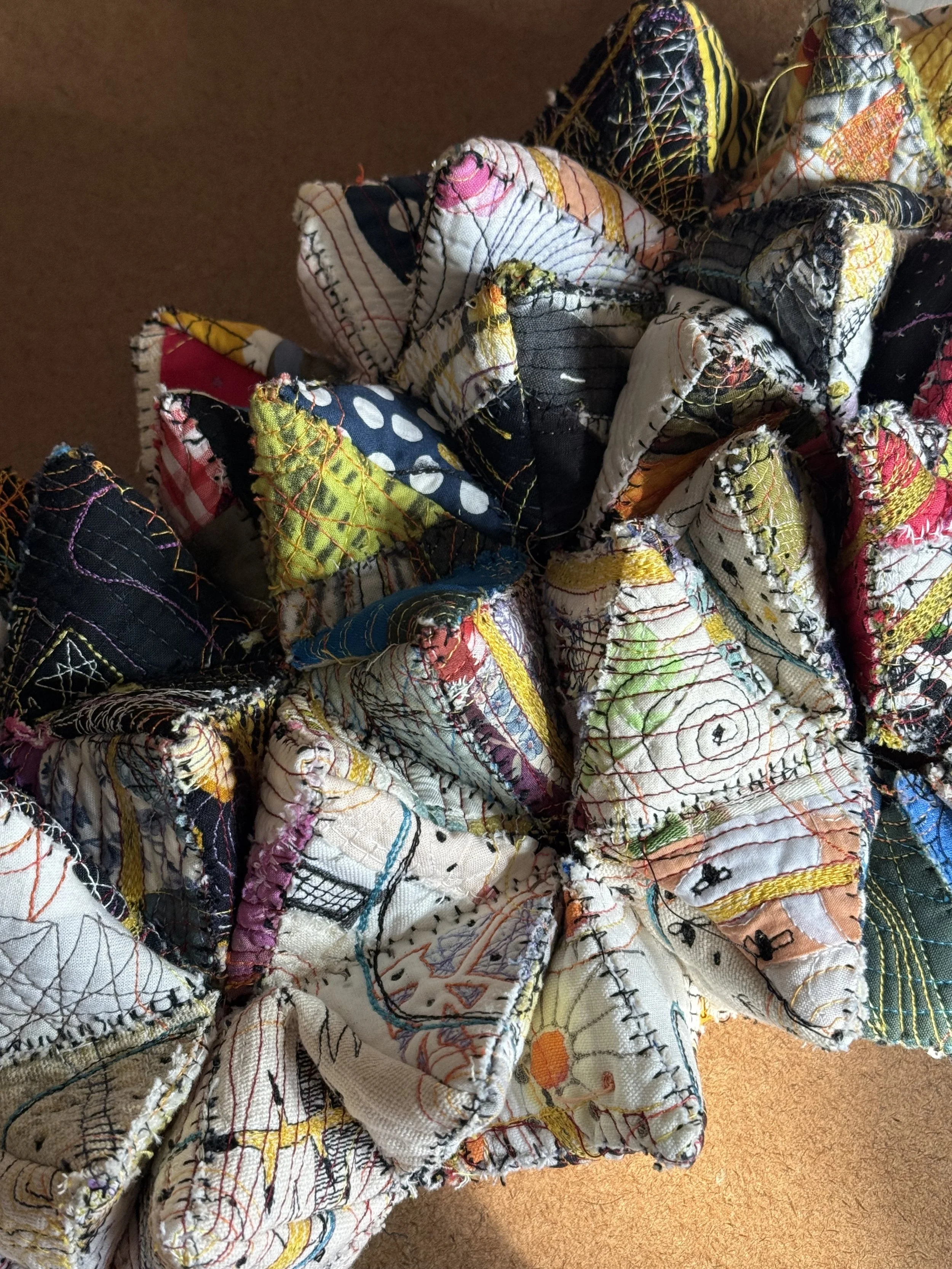
Triangles are a common unit in quilt construction and also very versatile for sculpture. Put four together and you get a pyramid. Three make very handy spiky shapes that combine well into a six-sided hive shape.

The underside of the constructed object.

These triangles are getting rawer and rawer from all the manipulations I have tried. I soon realized that I had to do some hand stitching to get the pieces together if I wanted them to hold their shape.

That took a while. It’s not my favorite thing to do but there is a sense of accomplishment in doing it.

Caterpillar, close up
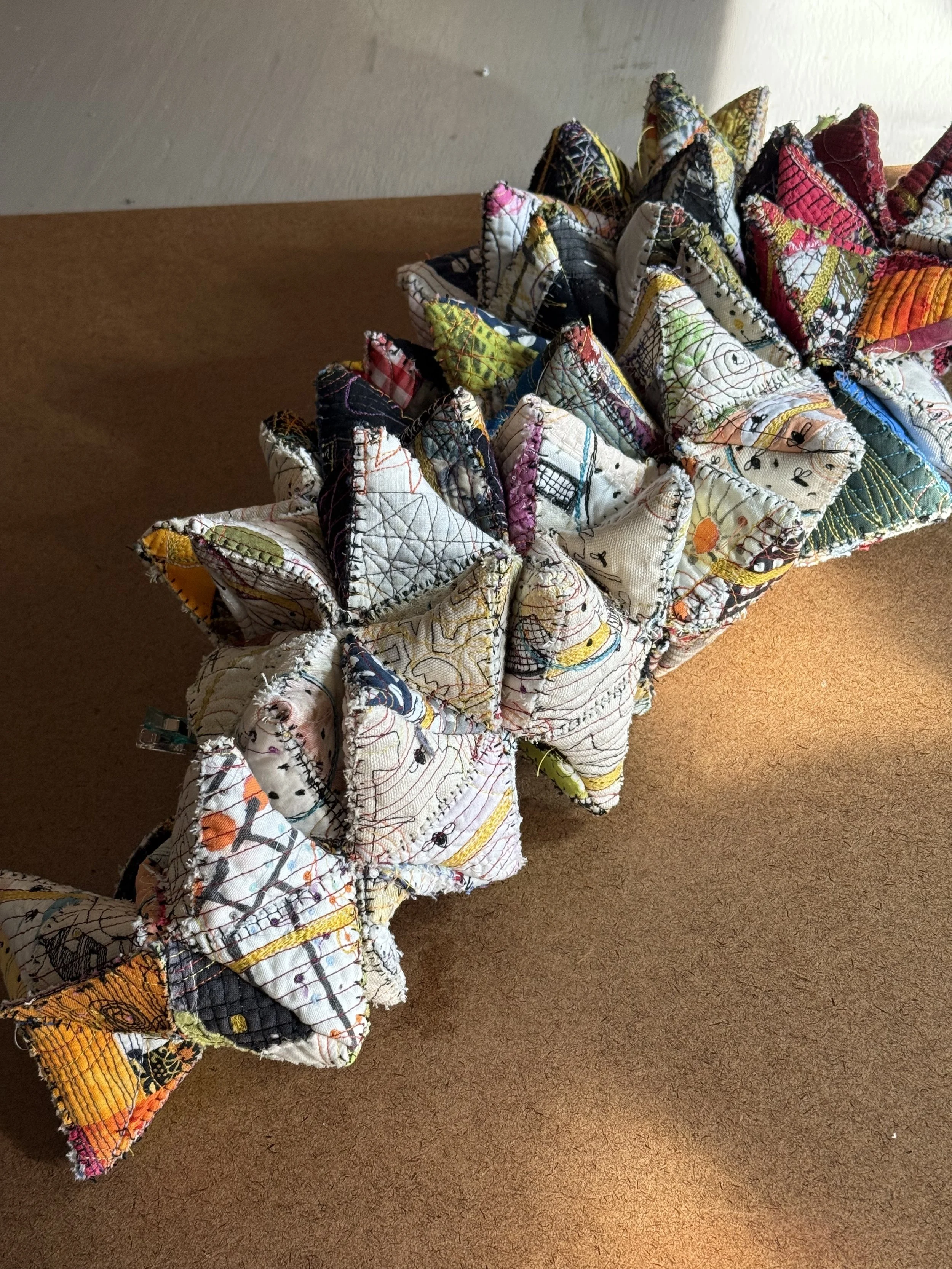
A spiky caterpillar, still in process.

I’m loving this shape and the versatility of triangular construction. I think I will repurpose a piece that is standing in my office to make a bigger version of this caterpillar shape. Invisible, the work shown below, was constructed with repurposed triangular pieces. She stands in my studio. It might be time to transform her into a new shape.

We all do that from time to time right?
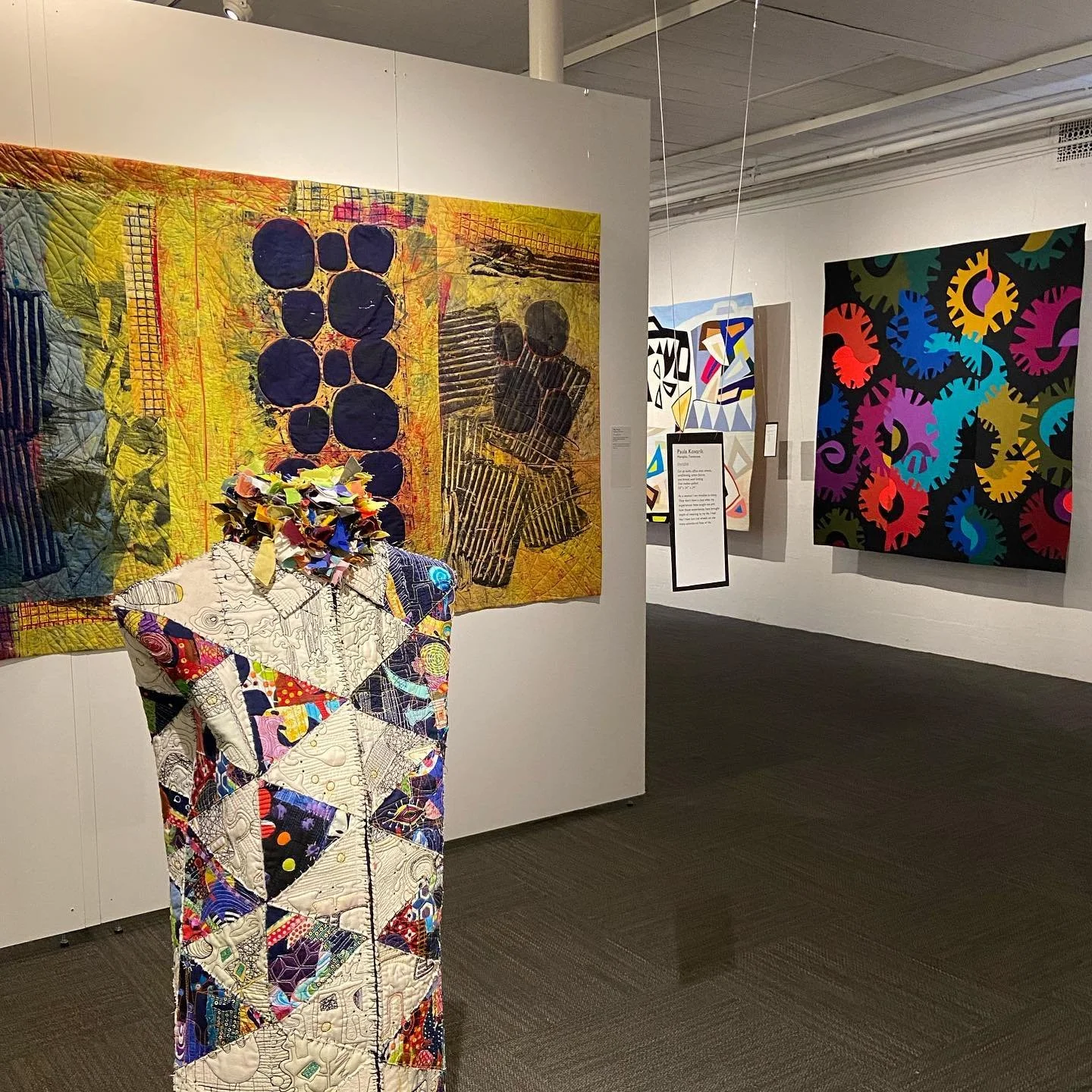
Invisible (foreground figure) shown at the Dairy Barn in 2019.


If I build it will you come?

I have been looking into a way to offer a stitching workshop here in Memphis. I want it to be all about process and experimentation. I’m thinking a 5-day or 3-day intensive. The Shapeshifter Art School in Memphis is offering a wonderful classroom with an attached art gallery for the workshop. There are lots of details I need to consider before committing to it. Here’s my question: Would you consider a trip to the beautiful, bluesy, artful city of Memphis to spend time with me, the mighty Mississippi and your sewing machine?

I'm interested

traveling unknown pathways

Sightlines, Paula Kovarik, 2015

Sightlines, Paula Kovarik, 2015

I was talking to a good friend this weekend about the fact that I can't seem to finish things. I am full of ideas and come into the studio each day with a new direction I want to pursue. Exploration, imitation and experimentation all teach me what to do next time -- perhaps with a clearer eye to finality. But often that next time doesn't arrive because I'm onto a different idea. A perfect example is this tangent lines piece. It started as an extemporaneous exploration of color piecing.
I decided to use saturated colors that interact with each other and shatter across a black and white surface. I used the willy-nilly approach of joining the color pieces from a scrap box instead of pre-planning and cutting to fit.

The composition came together with a strong horizon line and some interaction between the shapes. I thought it was a good start and that I could play with line to exaggerate a wacky perspective. Since the two colorful figures seemed to be communicating I wanted to explore how my line work might emphasize that. I used an acetate overlay and experimented with line patterns. I drew plumes of lines coming from the tips of the forms, antennae, perspective lines and heart beat lines but wasn't happy with any of them.

The piece lingered on the design wall for over a month. Then one day I came up with the idea of adding a line at each seam just to see what would happen -- an experiment in geometry. Would the composition come together or fall apart? Would the lines impede the message? What message?

Sightlines, Paula Kovarik

Sightlines, Paula Kovarik

There were a whole lot of lines to add. Over 275 if I counted right. The texture of the piece changed drastically. The experiment taught me:

  • lines of sight can be complicated,
  • forms have a trajectory that might not be apparent to the casual observer,
  • interconnectedness can have voids, and
  • I wasn't sure if I really liked it.
vacant doodle

vacant doodle

So ... with nothing to lose I went for more experimentation.

Remember those drawings you did on the back of your math homework or your English class spiral notebook where you scribbled a line and then colored the shapes that were formed? Well, maybe you don't. But I sure do. I still do that in a vacant sort of doodling mood. It occurred to me maybe these lines and forms had even greater secrets to reveal. You know....like a fourth dimension. Perhaps if I colored in areas where the lines formed triangles it would reveal a pattern that connects. Little did I realize that there are over 200 triangles formed by these lines and some of them take a huge hunk of thread to fill in. Tedious. I'm still finding triangles to fill, still seeing triangles in my dreams. Still.

And, from what I can tell. There is no pattern that connects. Just a whole lot of lines and triangles.

I think I'll crop it, block it, and wait for the next inspiration. For now I know it is unfinished, next to three other unfinished pieces on the boards. And that might be a good thing because I learned from it. Or a bad thing because it's still a mystery and I might have to add more. It does give me more ideas to pursue. How do forms inform line work? Where do lines intersect to add more meaning? Why triangles?

Not sure.

Sightlines, triangles, Paula Kovarik

Sightlines, triangles, Paula Kovarik