bearing witness

It is a gray day here with promise of sun in the afternoon. Gray days allow for long walks on the beach without the worry of sunstroke. 

Walking the beach at the Indiana Dunes National Lakeshore brings you face to face with industry. These smokestacks merging with gray clouds is a striking image in a natural preserve.

The folks at the National Lakeshore consider themselves stewards of the disparate ecosystems in their care. Biodiversity, restoration, replenishment and reexamining is the focus. Botanists, biologists, geologists and myriad other folk focus their attention on what has been saved, not what has been taken. These mills, smokestacks and furnaces bear witness to the history of the area when industry was king and economic stimulus was primary. 

Meanwhile over on a more secluded part of the beach I found at least a dozen monarch butterflies. At first I thought they were just landing. Then I realized they were dead. I couldn't help but wonder what they were doing there. Was this a last ditch effort to cross the water? Do they come here to party? Is it a migration zone? I need to do more research. Their colorful bodies being cradled by the rocks were stunning. 

And then I came upon this rock. A clear and present witness to the flight of the butterflies. Did he see it all happen? Does he have any thoughts about it? What exactly happened to that nose of his?

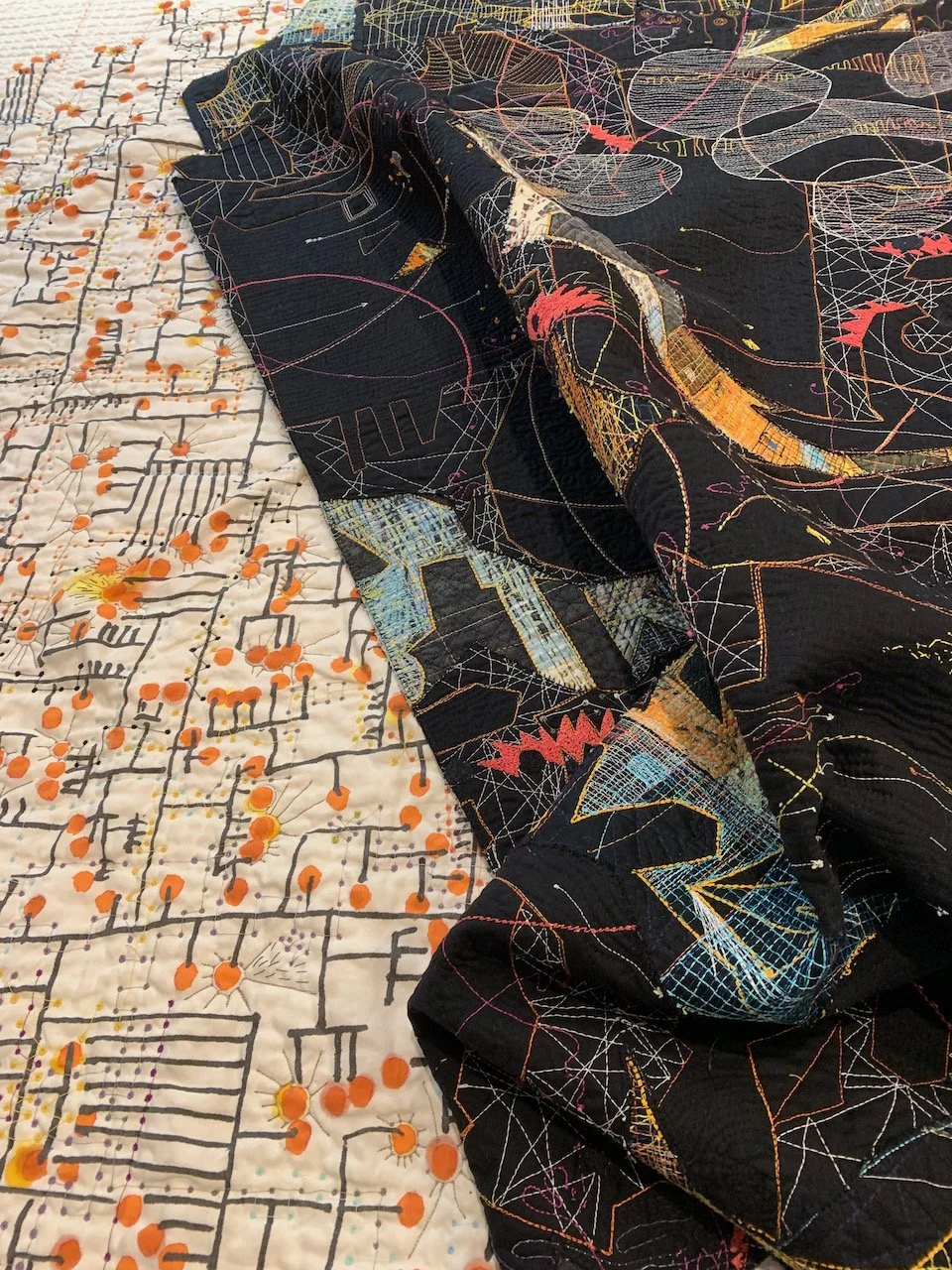
This piece began with one of his brethren. Rocks with holes in them always look like sentient beings to me. As you can see there are many others who bear witness to the surf, sand, butterflies and random humanoids with collection baskets. 

floating with the current

I floated my fabric in Lake Michigan today. Let the waves take it for a ride. The sparkly reflections were mesmerizing. I almost lost it to the lake.

The water actually looked blue when the fabric went under. 

Love the patterns that the light cast onto the fabric under water. 

Pockets full of rocks

Rocks at the beach speak of long journeys. As I gaze at the sunset I can’t help sorting and sifting through them. Organizing by color, by shape, by smoothness. I am particularly drawn to those shaped like hearts, or perfect circles, or tubes. 

But best of all are the ones with holes in them. What force of nature pierced these solid cores and left its mark?

Sand in my shoes

As a child my family would travel to lower Lake Michigan for summer holidays. I still remember that slightly moldering smell of my great aunt’s cabins, moss hanging off the roof and long stairways down to some of the most brilliant beaches of my life. Part of the journey to those cabins was watching with fascination and horror as we passed the steel mills and industrial smokestacks in and around Gary, Indiana. There was a smell of sulfur in the air and a certain dread of having to stop there while traveling through. The landscape was muscular, apocalyptic and wholly man-made.

Lake Michigan beaches are crowded with families this weekend.

The Indiana Dunes National Lakeshore hugs this coast and nestles in with the muscle-bound industry here at the base of the lake.

Botanists, politicians, scientists and neighbors all fought for the unique ecosystems represented here. Bogs and wetlands, black oak forests carpeted with ferns, rivers, ponds and of course, the dunes. Mountains of dunes. Dunes that swallow trees, dunes that shelter wildlife, dunes that build and move relentlessly with the action of the wind. Dunes that actually created beaches for the people in Chicago.

My walk today was in a black oak forest at the Indiana Dunes National Lakeshore

I will come to know this area better by spending these two weeks in residency. The National Lakeshore is a string of pearls, preserved and collected piece by piece into an assemblage of unique ecosystems. Though I am still stiff with judgment of how the land has been treated in the past, I see some reluctance on the part of the park rangers to condemn the industry in their midst. I am hopeful that the scientists are paying attention and that the politicians are working hard to save even more of the natural landscape.

Can industry honor the earth and provide jobs at the same time? How does nature adapt to intrusion? The employees of this national lakeshore are here to witness and maintain the sweet origins of the landscape. They educate the public, observe the changing landscapes, and continue the work of the people before them who recognized the richness and diversity of this unique ecosystem.

all packed up

I'm taking this road show north. What tools are essential?

Leaving behind: that ergonomically correct table and chairs, the custom ironing platform, movable cutting table, large design walls, backyard garden, fabric stash, home library, large screen computer, a good music system, family and familiarity.

Taking with me: scraps of fabric, my sister-in-laws machine (because my Bernina is being temperamental), Black thread, white thread, a pouch of notions, batting, three books of poetry, my camera, my ipad and some scrap paper. 

I am not taking any works-in-process. I am not taking preconceived ideas. I am not sure it will all work. But it all fits neatly into this tub. I wonder if trimming excess will build inspiration?