questioning the medium

I have four active pieces in process right now in addition to an idea for a long-term collaboration with children, a full year's collection of weather maps for a piece on climate change and ideas brewing for others. All of them will probably end up on fabric using thread.

I was recently chosen as one of 30 artists being profiled in a new book by Martha Sielman entitled Art Quilt Inspirations: Abstracts. Part of that process required me to answer some probing questions about how and why I do my work. I'll save that discussion for Martha's expertise but the exercise brought me to this: Am I using the right medium?

The Robert & Sara Genn Twice-Weekly Letter said this today: "When asked about painting's future purpose, abstract and photorealistic painter of landscapes Gerhard Richter replied that contemporary painters have both a connection to the tradition of painting and the need to depart from it. 'Questioning the medium,' says Richter, 'is part of the job.'" (to follow this insightful and inspiring missive: sign up here

Whew! I thought I was having a crisis of medium detachment....Good to know I am in great company.

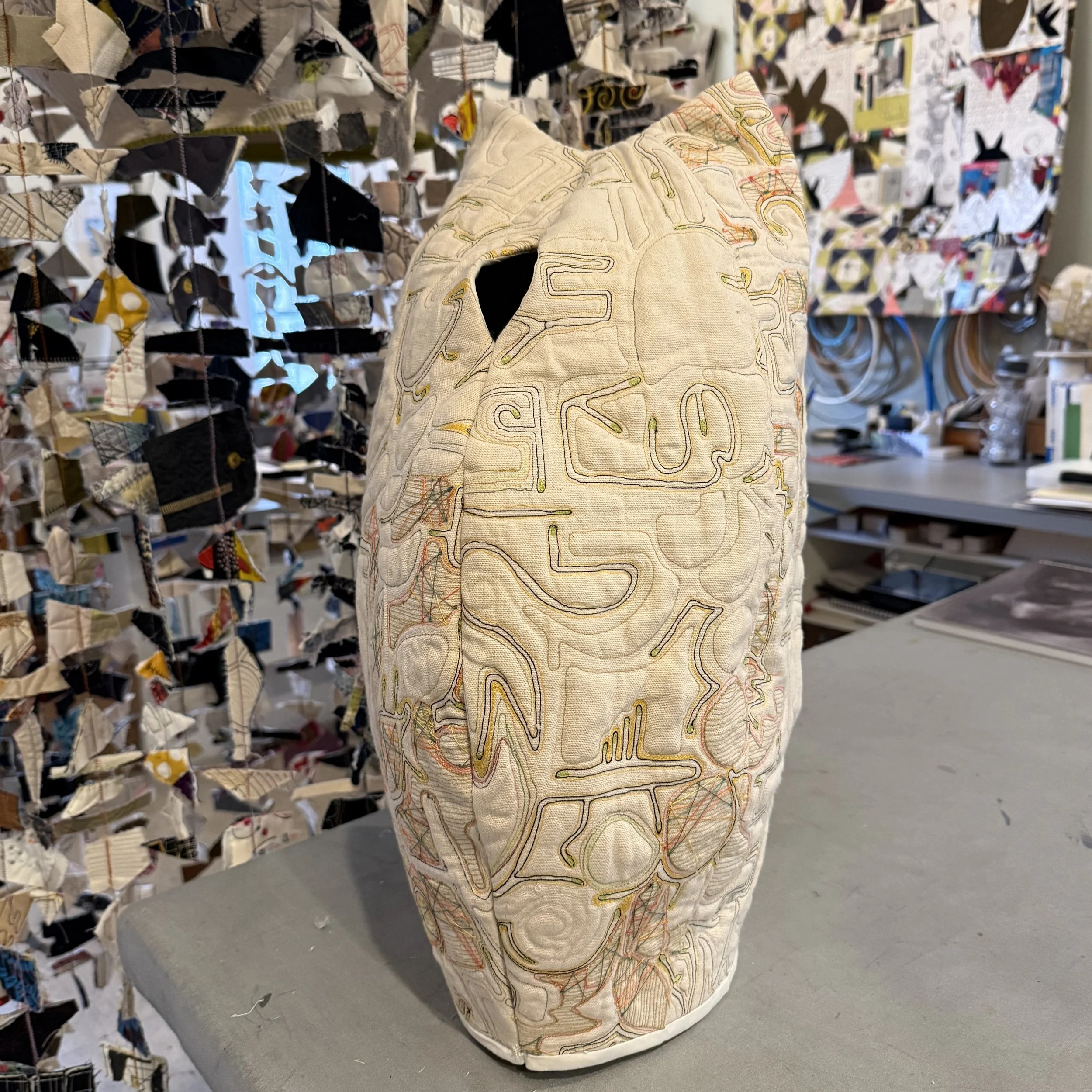
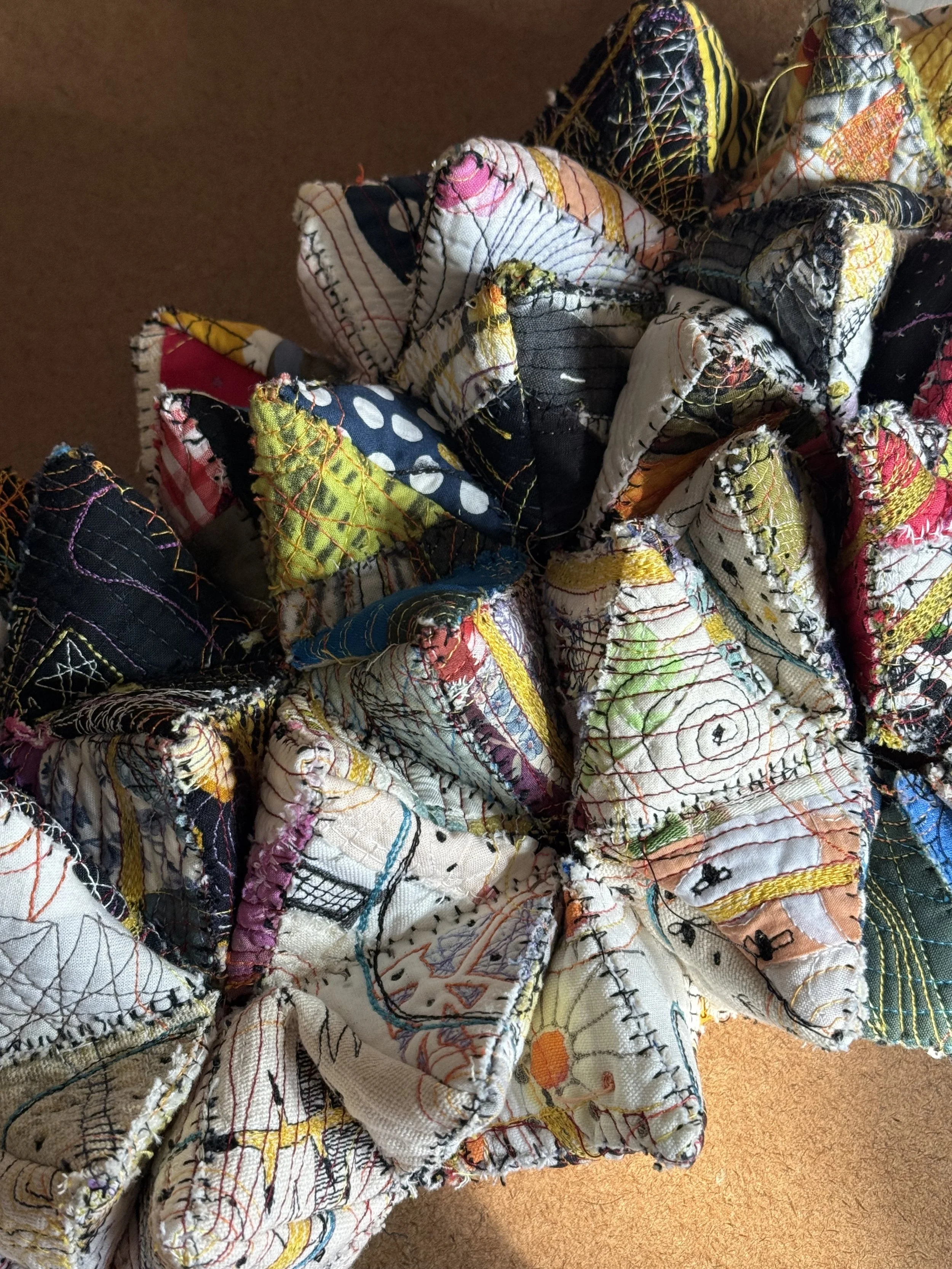
So why do I use fabric and thread? texture, line quality, and the meditative space it requires. But also because it references time, tradition and craftsmanship. All mediums are valid, some feel nubbier, take more time and challenge the viewer to explore the surface of meaning. Quilting does that for me, it takes ideas and breathes a new level of meaning into them. 

the back might matter

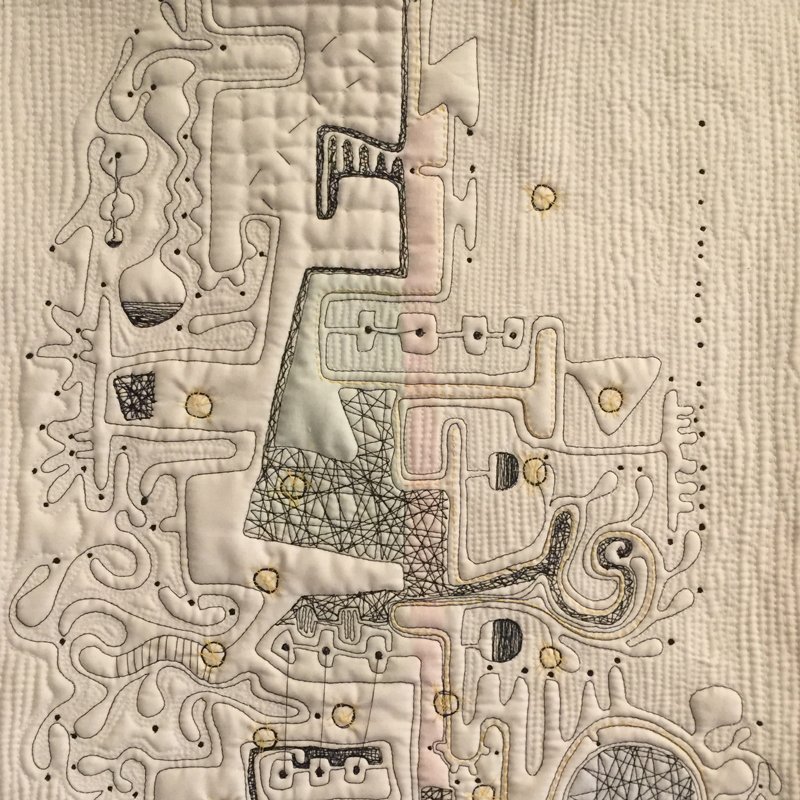
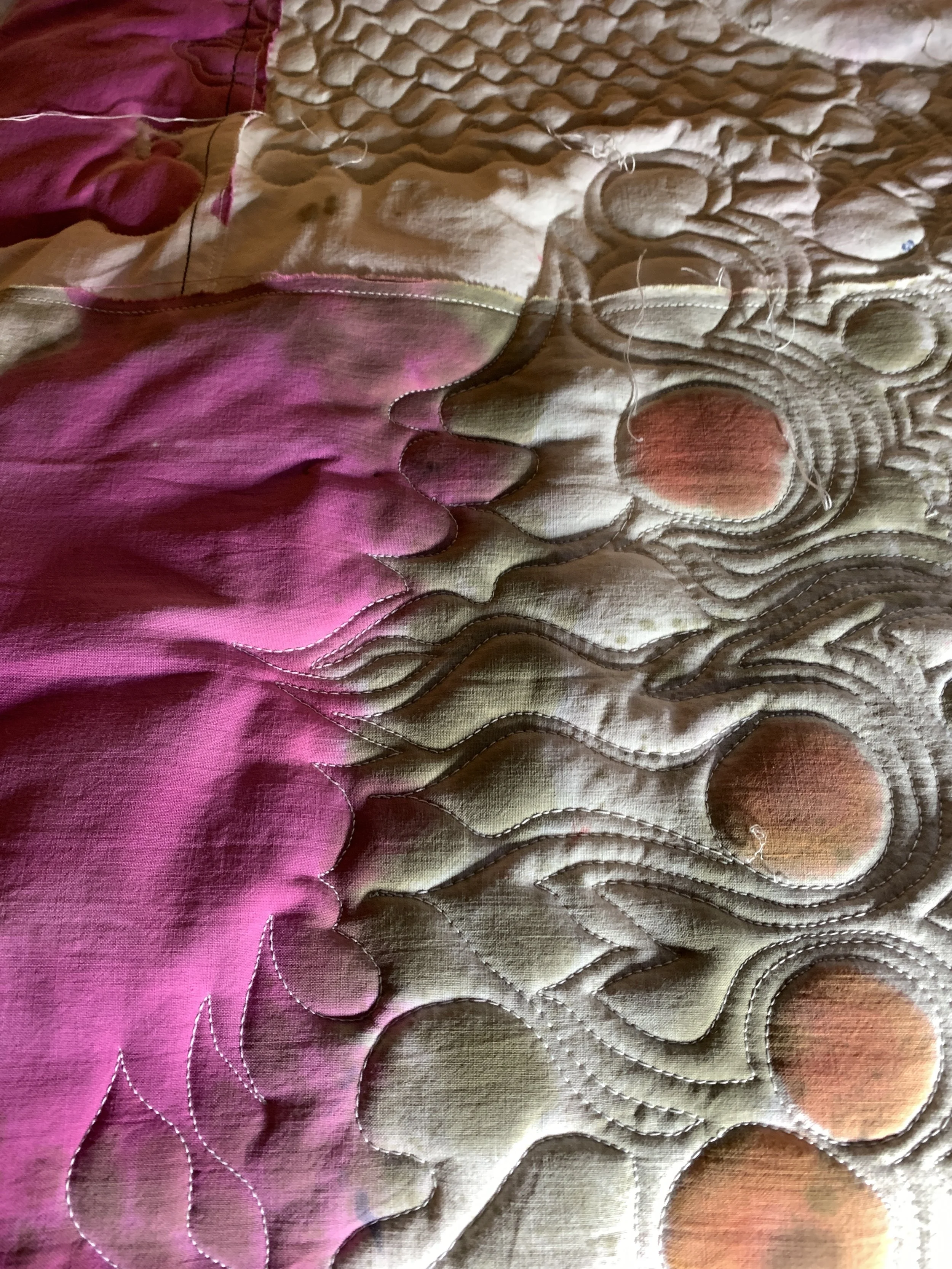
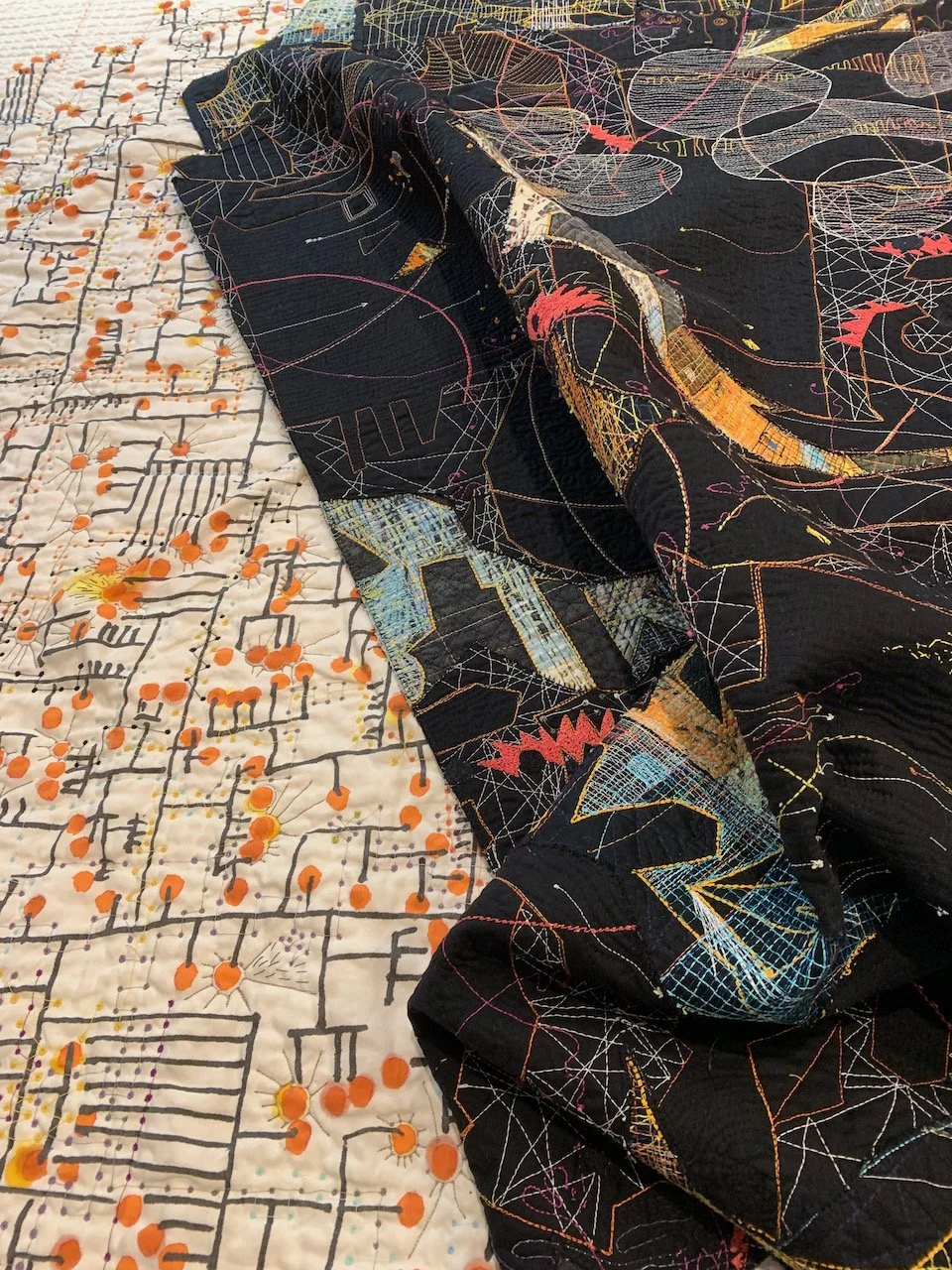
Normally I don't pay attention to the back of my pieces except to tie off loose threads, iron new seams and finish rough edges. But the other day, while talking to a friend about the mind map piece I have been working on, I turned it over on the design board to focus on the construction lines.

and I like it. In fact I like it so much it might end up being a two sided piece.

Mind map, Paula Kovarik, back, work-in-progress

Mind map, Paula Kovarik, back, work-in-progress

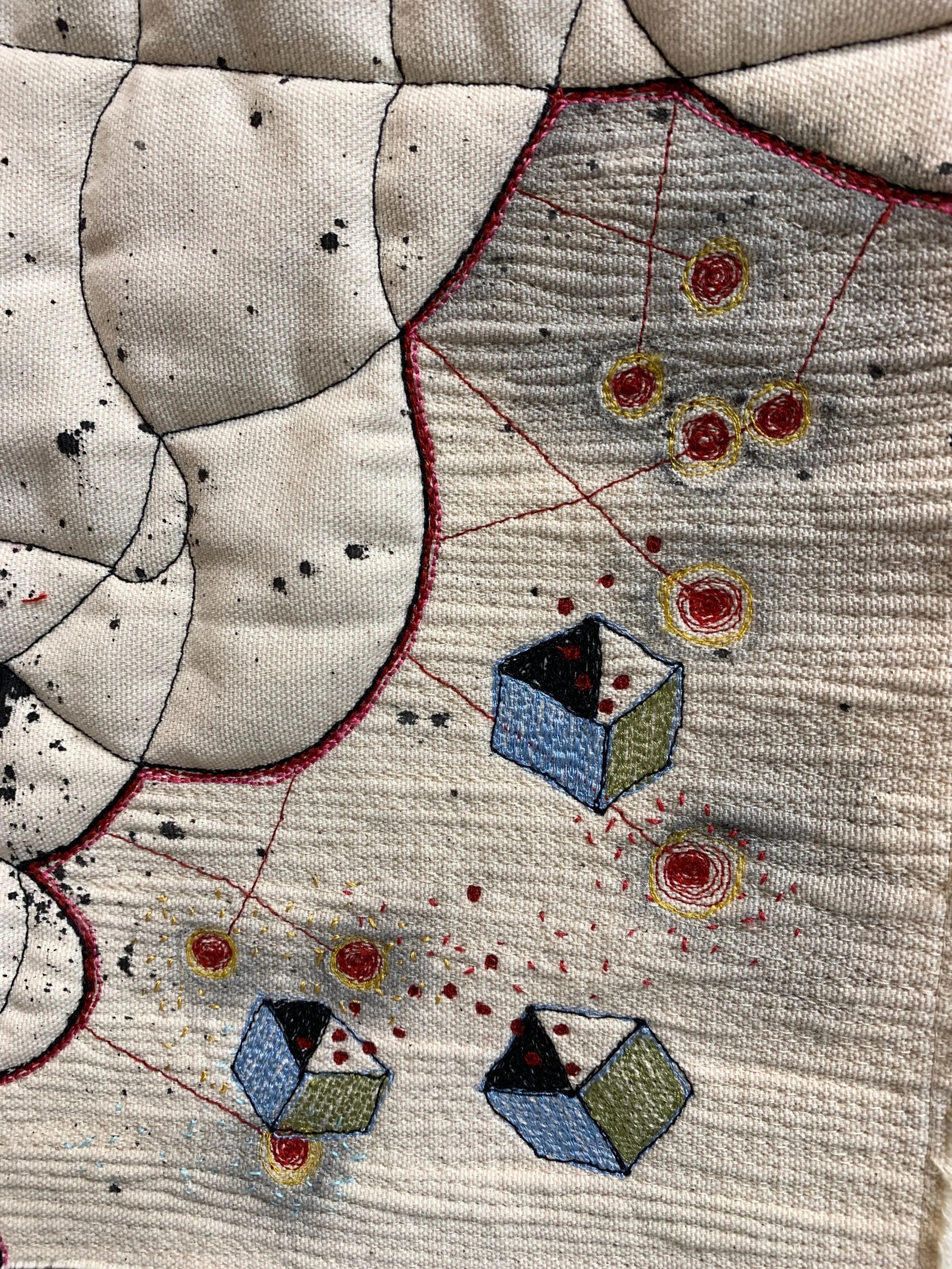
Mind Map, detail, front

So for now, I will turn this piece over and work from behind. It may change the front, it may add new depth. We'll see. Working from the back allows for more stream of consciousness line making. Mysterious, complicated and perhaps, in the long run, revealing.

thankful

The holidays are here and the hustle and bustle disrupts my studio time. It takes a little getting used to. I need to figure out how to go with it instead of fighting against it. I need to remember that the activities, traditions, and opportunities for shared memories are more important than getting one last stitch into that binding.

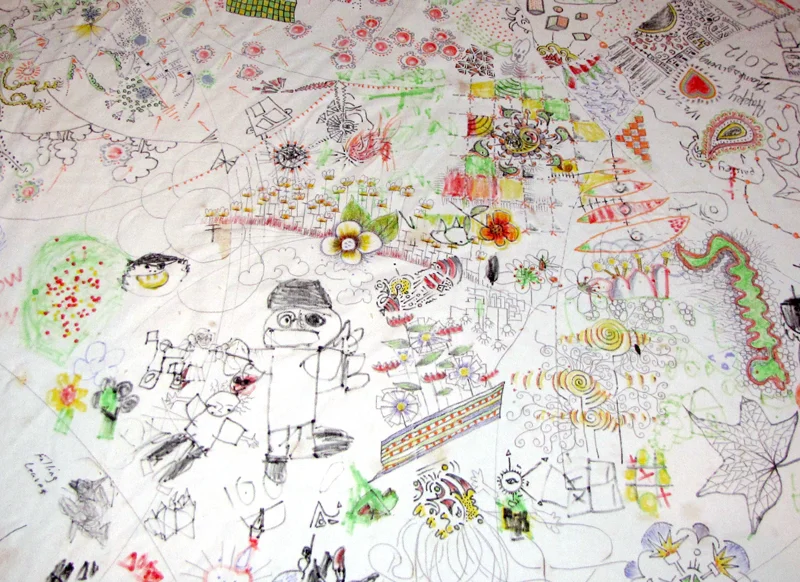
thanksgiving tablecloth, Paula Kovarik

I remember the Thanksgiving from 2012 more than I do the one in 2013. The crowd was rowdy, the food somewhat mismatched (but still delicious) and at the end of the meal we all drew pictures on the tablecloth with fabric markers. Family members from four to 65 all contributed a little to create the masterpiece above. I take it out each year now to remember that day and this crazy collaboration.

I recommend it to anyone who has felt the holidays getting stale (I purchased inexpensive cotton banquet cloths for the canvas).


A collaboration

Asher's drawing

Asher's drawing

I have an idea for a new series. And I want others to participate.

I am fascinated by children's drawings. My sons and grandsons have created some of my favorite art. The loose and intuitive line they use seems to come from a different inner fire. One that I strive to attain myself.

Every child is an artist. The problem is how to remain an artist once we grow up. - Pablo Picasso

So, here's what I am thinking -- I would like to stitch children's drawings onto cloth, making the line more permanent, more textural. It will be a way to feel the way the lines are created. Trouble is I don't have a lot of drawings in my collection. I am greedy for more. Especially those of monsters and robots.

That's where you come in. Do you have any of those precious drawings saved in your memory box somewhere? Is there a 5 year old nearby who can draw with passion?   Subscribe to my journal if you are interested. I will send you some of the details for this project. All who participate will receive a set of my greeting cards as a thank you.

Greeting cards, Paula Kovarik

spirals - a universal pattern

Sonja Hinrichsen draws in snow. Her landscapes are collaborative, experiential and temporal. Her goal is to further the appreciation of the natural world. She says it this way:

These works correspond with and accentuate the landscape, and I hope that they help arouse appreciation and consciousness for the natural world. Modern society is becoming increasingly more disconnected from nature. I believe, however, that for a successful future of humanity it is essential that we re-gain a greater awareness of our planet’s nature. - Sonja Hinrichsen.
Sonja Hinrichsen snow drawing at Catamount Lake, Colorado

Sonja Hinrichsen snow drawing at Catamount Lake, Colorado

Spiral meander, Paula Kovarik

Spiral meander, Paula Kovarik

Those of you who have followed my work may see a strong resemblance to some of my doodling. That's why when I saw Sonja's work I was immediately attracted to it. I wondered about how universal patterns like the spiral become part of an intuitive vocabulary we all recognize and use --the pattern that connects (see Gregory Bateson for more discussion of this). I know that I am entranced by them. My work intuitively follows those patterns.

Spirals are everywhere: shells, leaf whorls, water currents, dna, wind patterns -- even the path of the moon around our earth and sun and the galaxy within which we live. (There is a wonderful discussion about fibonacci spirals here: Doodling in Math: Spirals, Fibonacci and Being a Plant by Vi Hart)

So I wonder...since we are part of a spiral galaxy does this influence the way things grow and the way we interpret them? Is the answer in the spiral?